
Queen Mary University Online Course Finder
From Discovery to Decision
Designing the FMD Online Course Finder
Project Overview
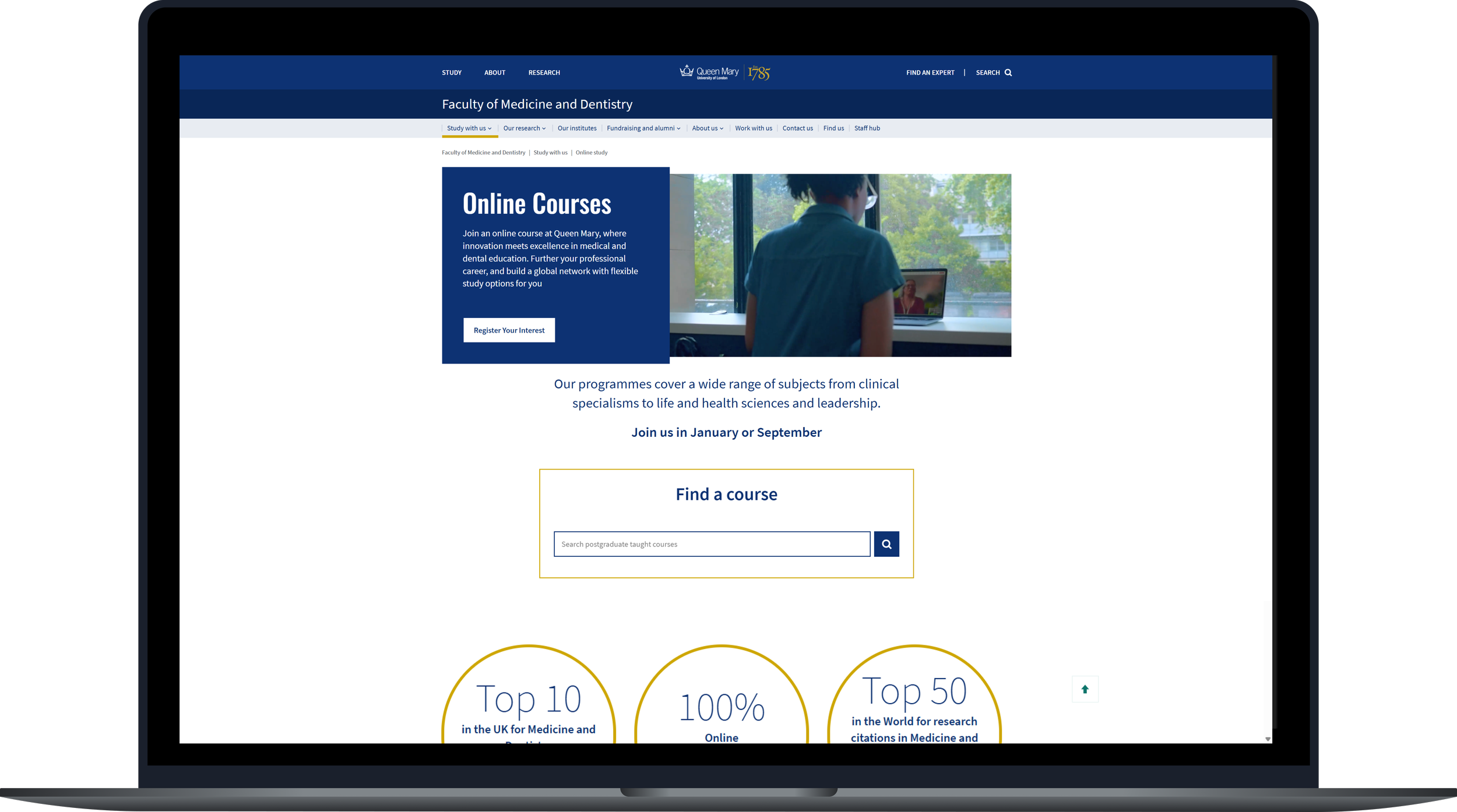
The Faculty of Medicine and Dentistry (FMD) lacked a dedicated, intuitive gateway for prospective online learners. As demand for flexible medical and dental education increased, it became critical to make FMD’s online portfolio visible, navigable, and competitive.
This project reimagined the Online Course Finder as a user-centred, scalable discovery tool aligned with Queen Mary’s Strategy 2030 and the CARE agenda enabling learners to quickly discover, compare, and confidently choose online programmes.
Product & UX Case Study
Role: Product Owner, UX Researcher & Designer
Collaborators: Senior Learning Designers, FMD Marketing, TEL Team, Web Stakeholders
Timeline: July 2024 – Launch 2025
Tools: Figma, FigJam, Miro, Figma AI, Chat GPT, T4 CMS

Process
Design Approach: The Double Diamond Framework
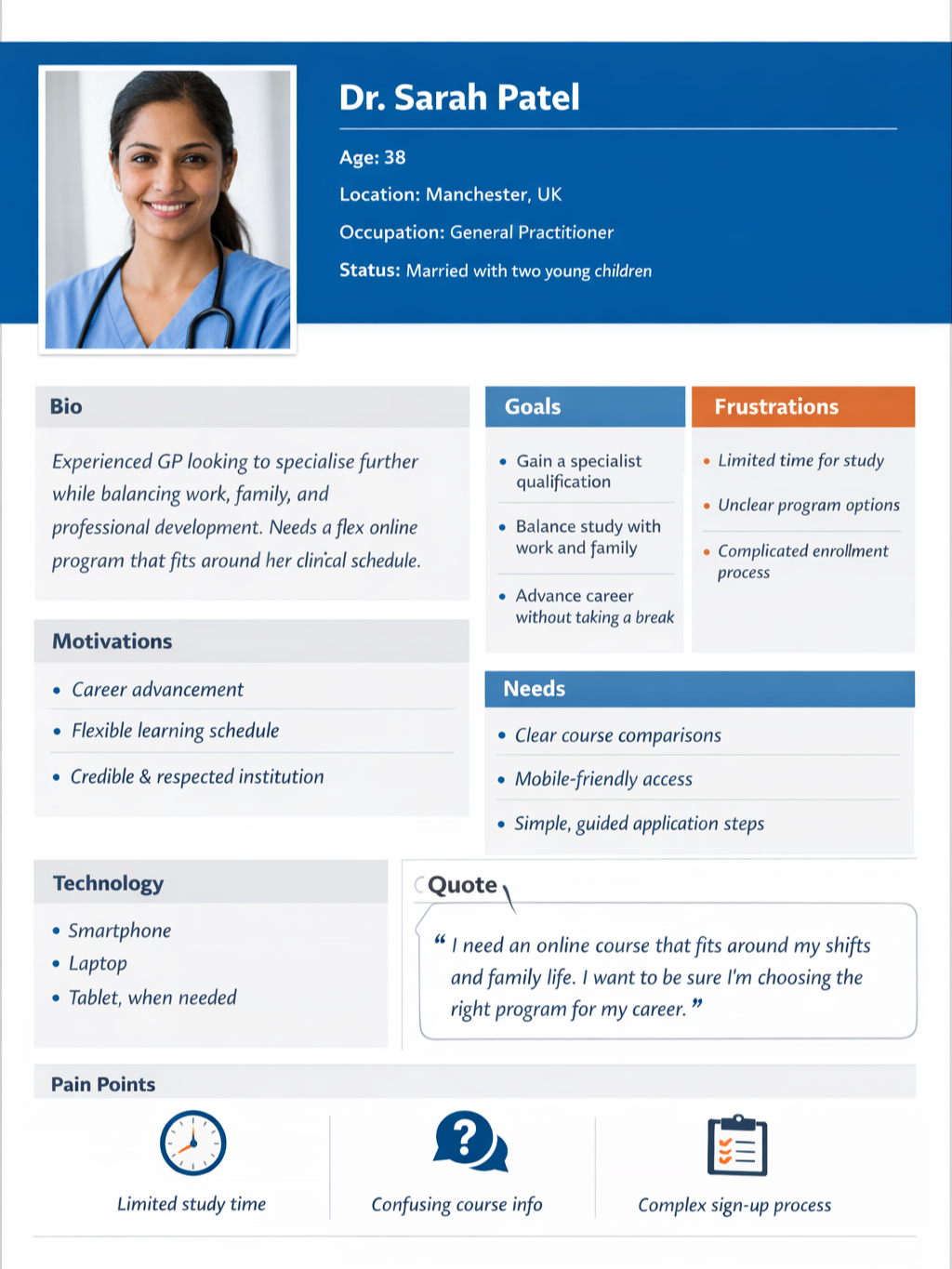
These scenarios surfaced recurring themes: limited time, decision fatigue, need for clarity, and desire for confidence in institutional quality.
A competitive analysis of comparable institutions reinforced expectations that high-quality online programmes should be easy to find, clearly structured, and confidently presented.
The insight was clear: the issue was not programme quality, it was discoverability and clarity.
DEFINE: Sharpening the Challenge
Synthesising insights led to a focused design challenge:
While FMD offers high-quality online programmes, prospective learners struggle to efficiently discover, compare, and evaluate options within the current structure.
Through collaboration with the Digital Education Studio, FMD Marketing, Technology Enhanced Learning, and web stakeholders, the project scope was refined around two priorities:
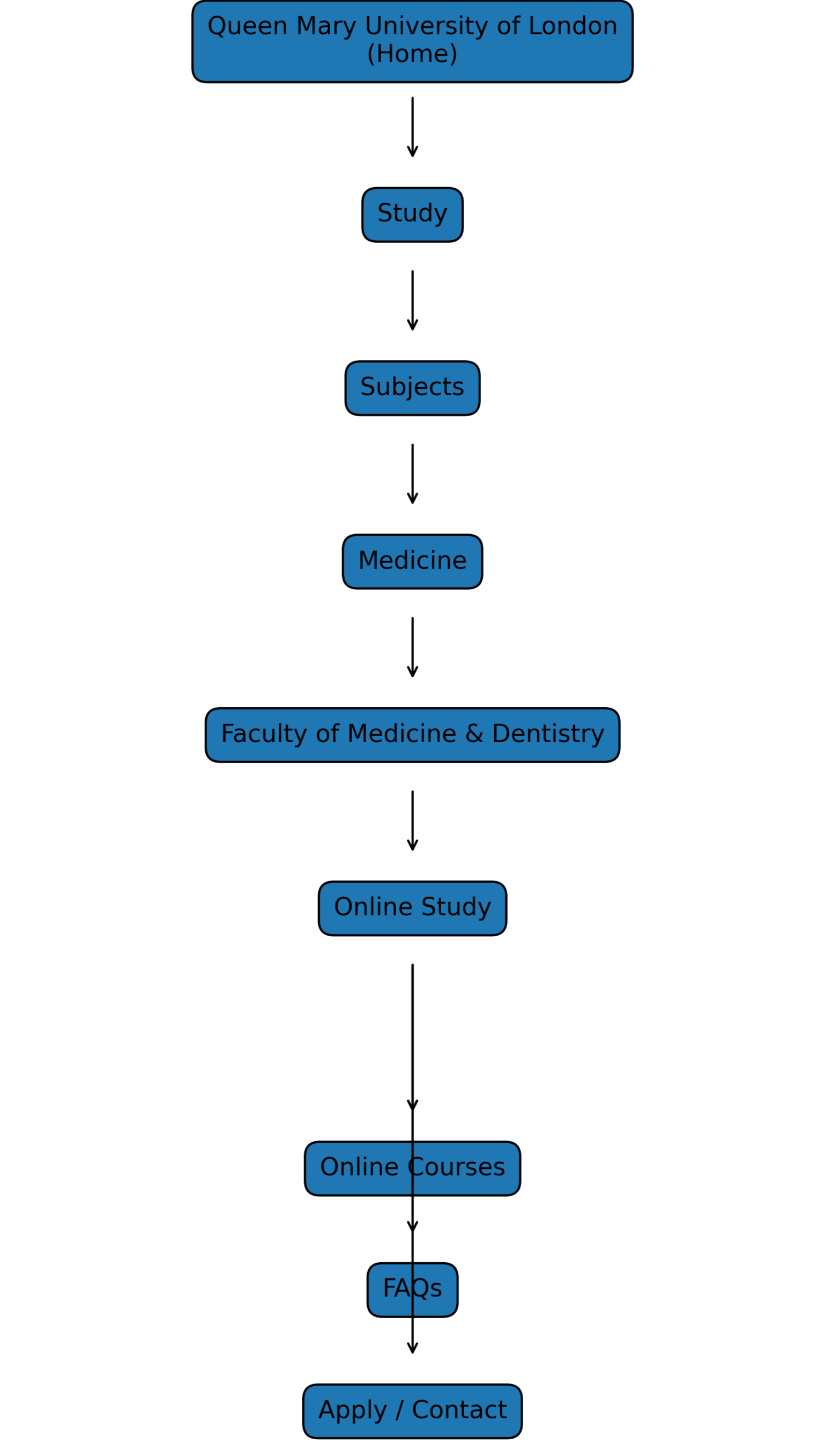
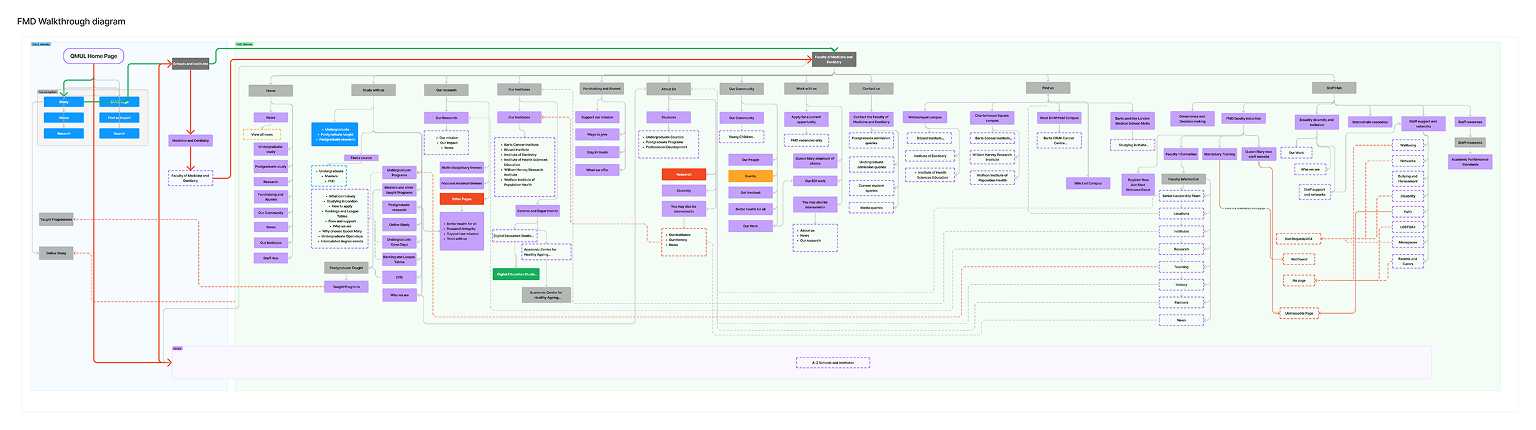
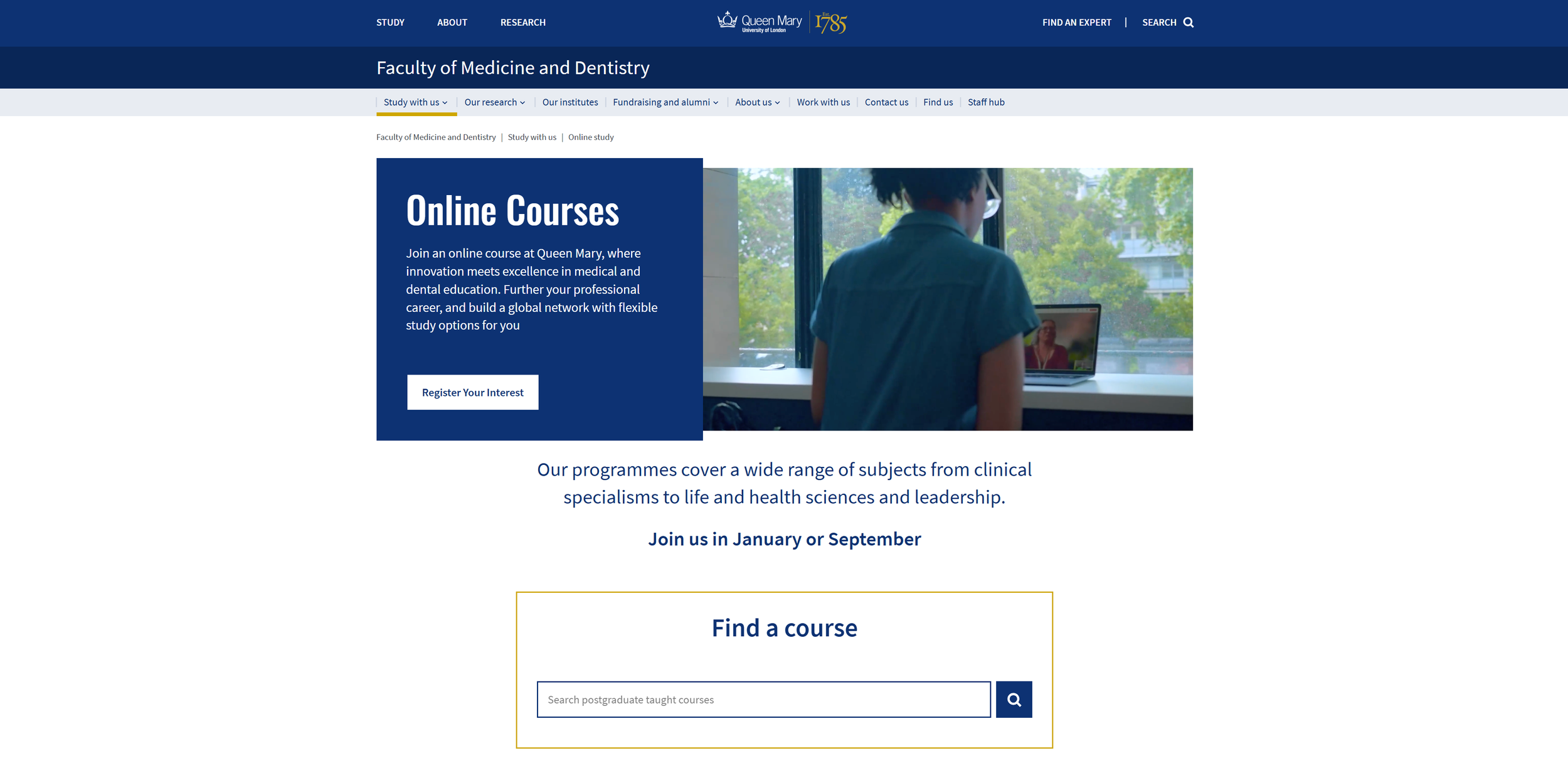
Information Architecture: The navigation was restructured to surface online provision earlier and more consistently.
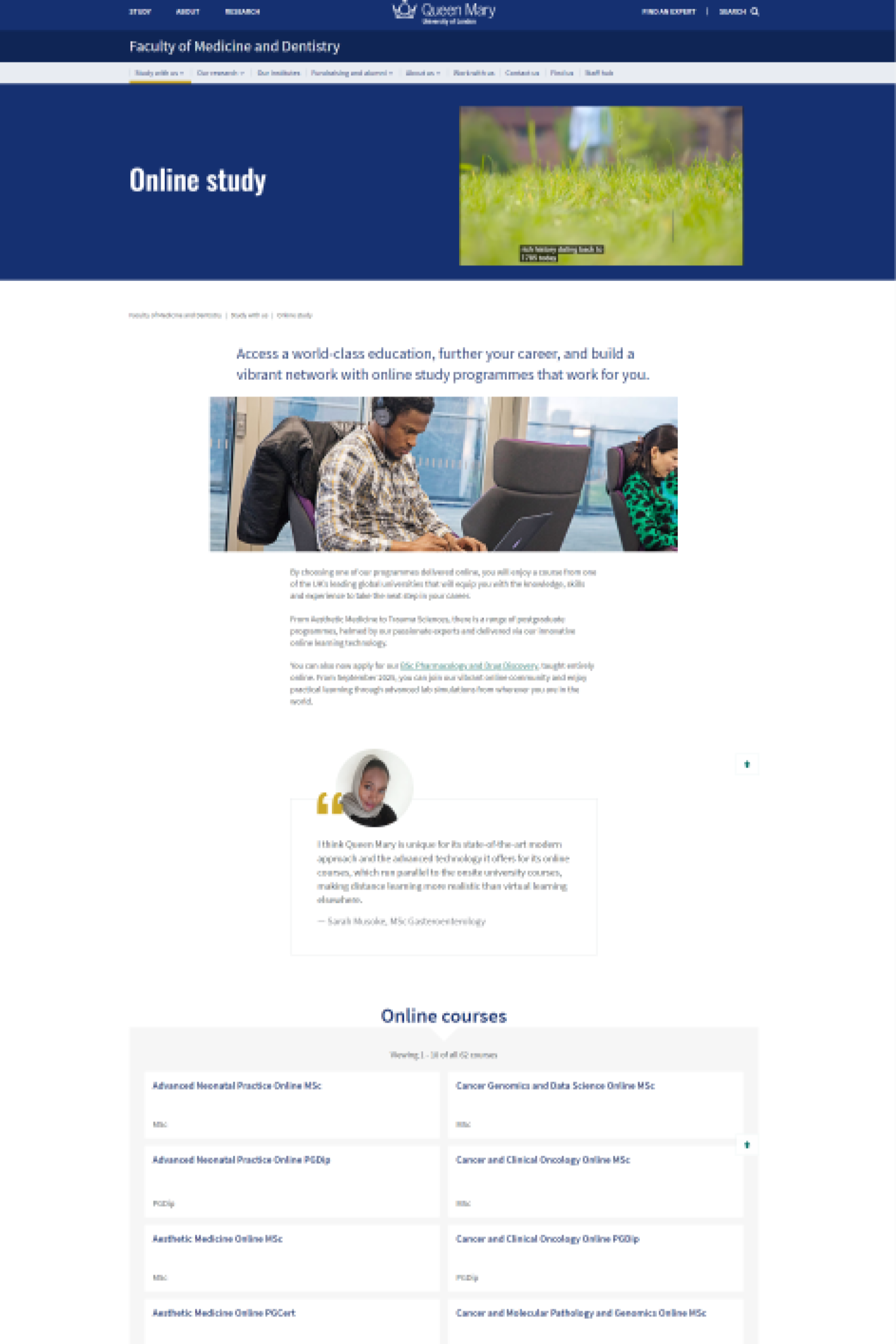
A dedicated Online Study hub and Course Finder page were introduced, reducing reliance on trial-and-error browsing.
DELIVER: Making Courses Visible
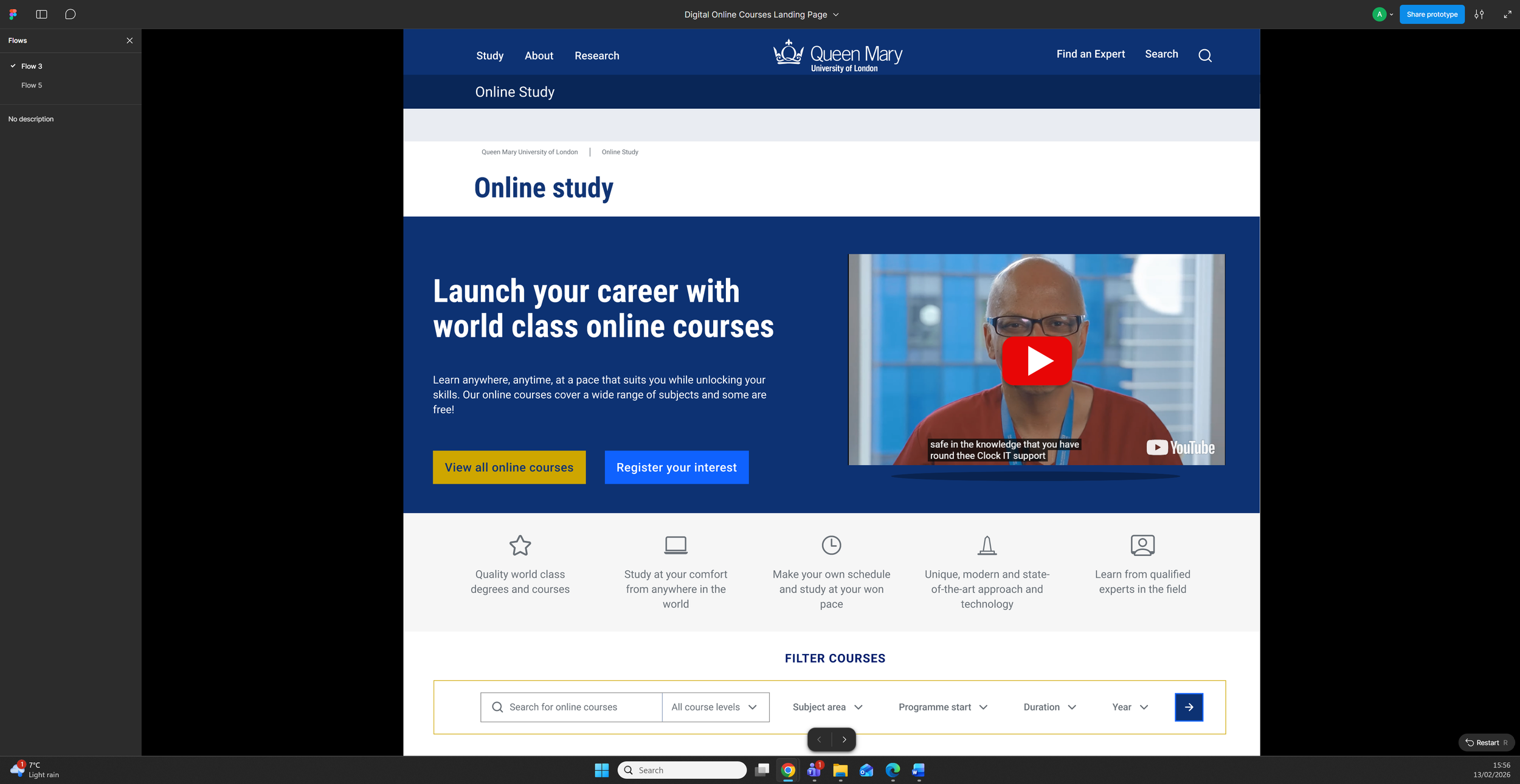
The final phase translated research insights into high-fidelity designs aligned with Queen Mary’s brand.
The Course Finder features:
Clear comparison cards
Structured filtering (mode, level, duration, specialisation)
Consistent programme summaries
Clear calls to action
Responsive layouts across devices
Content was streamlined and standardised to support confident decision-making and reduce uncertainty around online study.
Final designs were implemented within the T4 CMS, ensuring seamless integration with existing FMD web infrastructure.
Implementation in T4 required adapting designs to existing CMS constraints, balancing usability improvements with technical feasibility and content governance.
The result is a Course Finder that reflects FMD’s commitment to inclusive, high-quality education, enabling learners to see themselves at Queen Mary and take the next step with confidence.
The project followed a user-centred design approach grounded in the Double Diamond framework. This ensured the solution was not only visually refined, but strategically aligned with learner needs, institutional priorities, and the realities of studying online alongside professional commitments.
Discover → Define → Develop → Deliver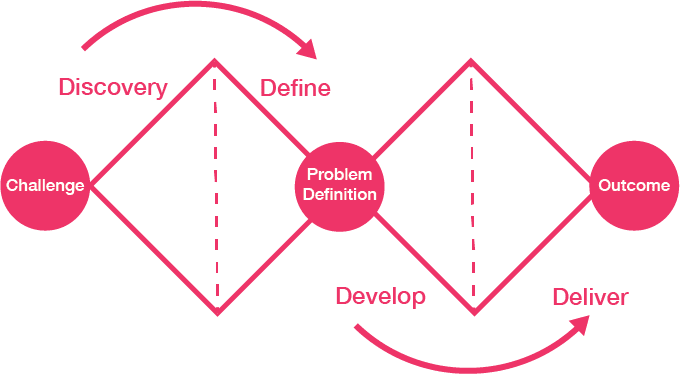
DISCOVER: Understanding Learners and Their Context
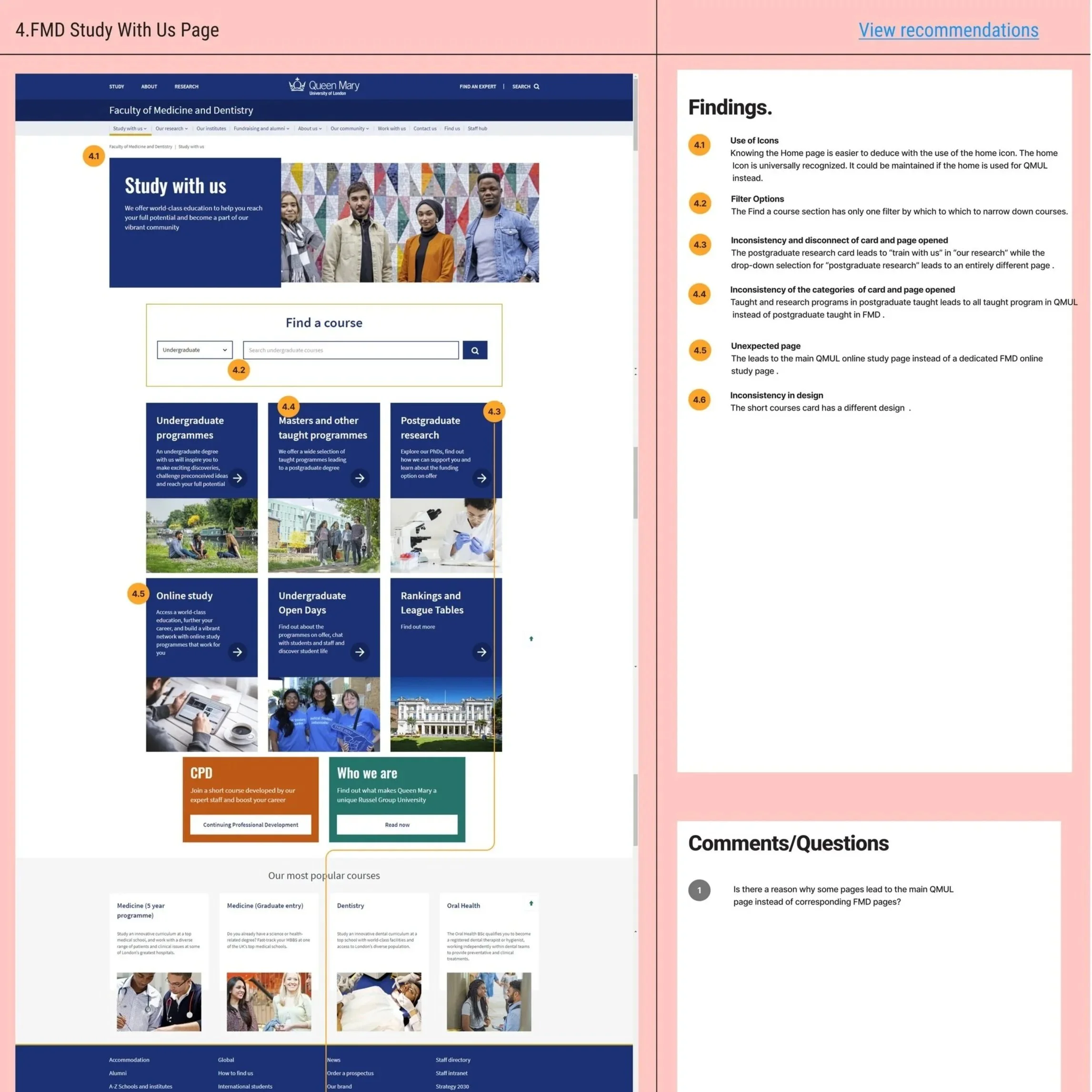
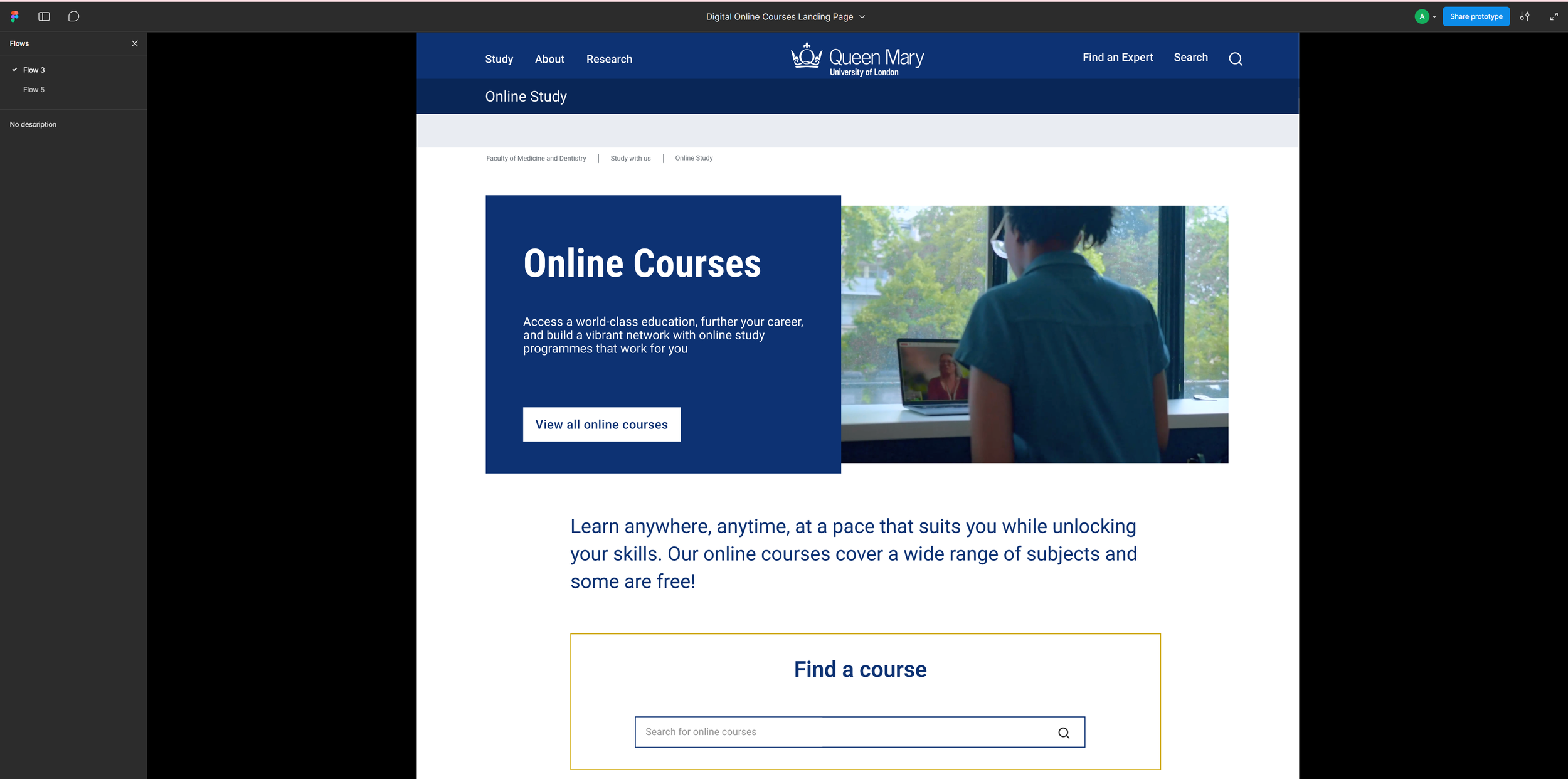
The discovery phase began with a UX audit of existing Online Study and course-related pages. The evaluation revealed several friction points:
No dedicated FMD online course finder page
Online provision surfaced too late in navigation
Reliance on insider knowledge to locate programmes
To deepen understanding, I developed audience scenarios representing priority learner groups, including working clinicians, international professionals, and career-progressing practitioners.
Establishing a clear gateway to FMD’s online offer and reducing friction during course comparison and evaluation. Success would mean enabling learners to quickly answer three essential questions:
What programmes are available online?
Which option fits my needs?
What are my next steps?
DEVELOP: Exploring Solutions Collaboratively
With the problem defined, the focus shifted to exploration and iteration.
User Flows: I mapped realistic user journeys from entry point to application, identifying key decision moments where reassurance, clarity, or comparison tools were required.
Wireframing & Prototyping: Low- and mid-fidelity wireframes in Figma allowed rapid testing of:
Content hierarchy
Filter logic
Card layouts
Scannability
Comparison clarity
Design decisions prioritised: reduced cognitive load, rlear visual grouping, concise programme summaries and mobile responsiveness.
Regular stakeholder reviews ensured alignment with technical feasibility, institutional standards, and marketing objectives.

ACCESSIBILITY & INCLUSION
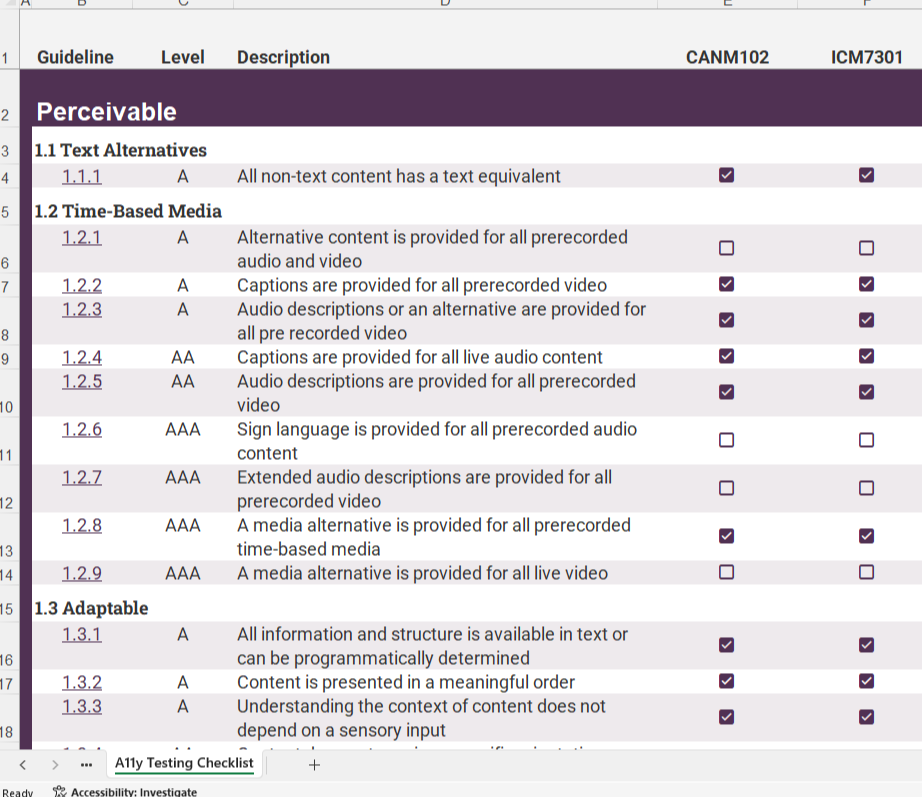
Accessibility was embedded throughout the design process, aligning with WCAG 2.1 AA standards.
Design considerations included:
Strong colour contrast ratios
Clear typographic hierarchy
Keyboard navigation support
Screen-reader compatibility
Reduced visual clutter
The goal was not only compliance, but genuine usability across diverse learner contexts including those balancing professional and caregiving commitments.
Usability testing sessions were conducted with a diverse group of users to validate clarity, filtering logic, and navigation pathways.
Feedback informed refinements to:
Filter labelling
Course card information hierarchy
CTA clarity
Mobile layout spacing
Early qualitative feedback indicates improved clarity and visibility of FMD’s online offer.
Quantitative impact is currently being monitored post-launch, with analytics and UX audits planned to inform iterative improvements.
TESTING & ITERATION
Outcomes
Improved discoverability of online programmes
Reduced navigation friction
Clearer comparison across courses
Strengthened cross-team collaboration
Established reusable UX standards for future initiatives
Looking Ahead
Next steps include:
Analytics review to measure engagement and conversion patterns
Iterative UX audits
Enhanced filtering features
Scalable framework expansion as new programmes launch